
- Central banks are holding rates steady because inflation is being driven by supply shocks, not overheated demand.
- Higher interest rates cannot fix disruptions in energy infrastructure or global supply chains.
- Emerging market instability adds another layer of risk to premature rate cuts.
- Businesses should plan for elevated, range-bound rates through 2026 rather than waiting for relief.
- A stable rate environment can still create strategic planning opportunities for disciplined operators.
Imagine you’re planning a capital investment for next year. You’ve been waiting for rates to come down before pulling the trigger. Your banker told you “maybe mid-year.” Your financial advisor said “soon.” And yet here we are, with the Federal Reserve, the Bank of England, and the Bank of Japan all holding steady, watching the same global pressure points, and none of them moving.
That waiting game has a cost. And if you’re running a business, understanding why rates are frozen, and when they might actually move, is directly relevant to your planning decisions right now.
The rate pause isn’t indecision. It’s a deliberate response to a type of inflation that higher interest rates cannot fix.
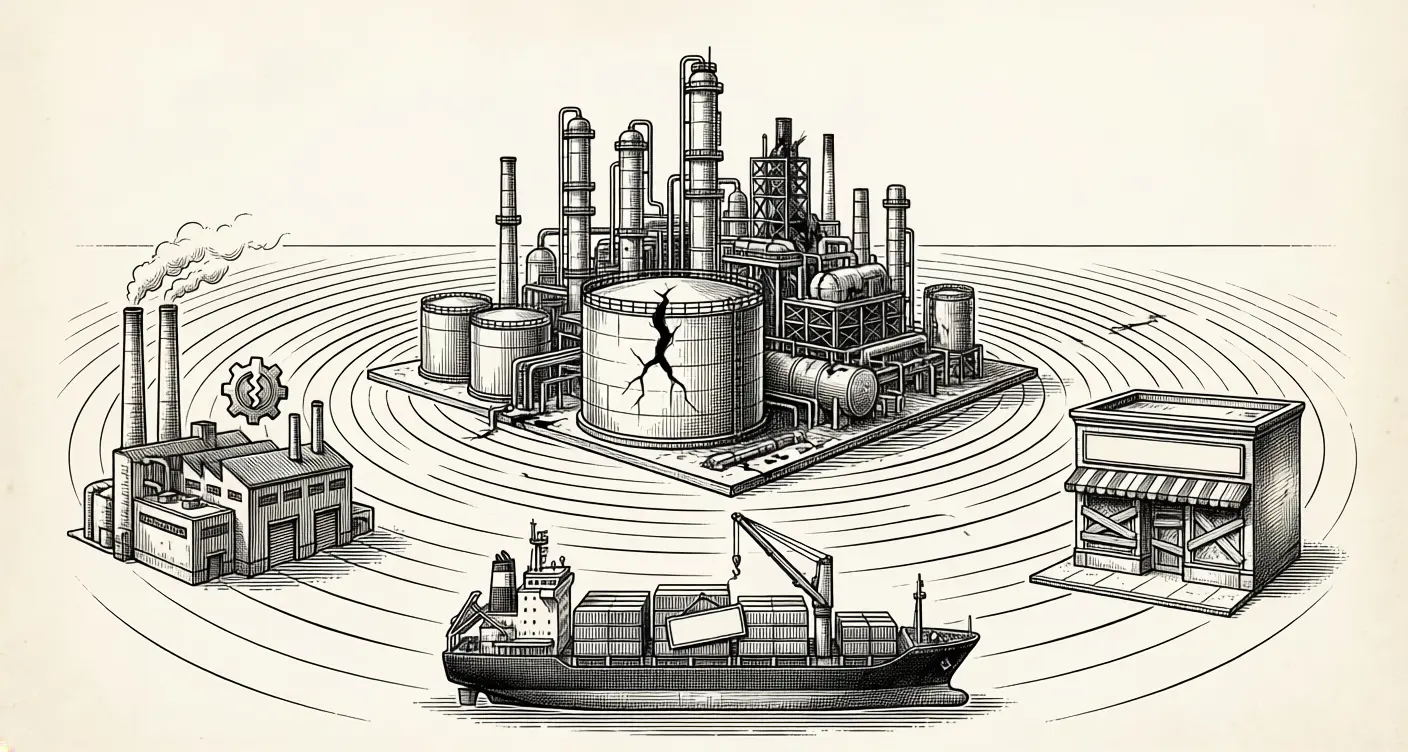
The Common Thread: Energy and Supply Shocks
The recent strike on Qatar’s Ras Laffan LNG facility is a useful starting point. One hit on critical energy infrastructure sent oil prices up 10% within days. That kind of move is not a US problem or a UK problem; it ripples across every economy simultaneously.
When energy gets expensive, the cost shows up everywhere. Manufacturers pay more for fuel. Shipping costs jump. Retailers pass higher energy bills to consumers. These are supply shocks, and this is the critical distinction:
Supply shocks push prices up not because consumers are spending too much, but because production and distribution cost more.
Interest rate increases work by cooling demand. They do nothing to fix a pipeline or lower fuel prices.
Cutting rates into a supply shock would pour gasoline on an already burning problem.
The Fed, the Bank of England, and the Bank of Japan all understand this, which is why they are holding rates steady. It is a deliberate choice to avoid making things worse.
Why Inflation Isn’t Playing by the Old Rules
The traditional monetary playbook is straightforward: raise rates, reduce demand, prices fall. That works when inflation is demand-driven. Right now, it is not.
Producer inflation in the US remains above expectations, despite two years of elevated rates.
Japan’s import costs are climbing, driven by a weakening yen and higher commodity prices.
The UK is dealing with goods inflation even as consumer demand remains soft.
These are structural problems rooted in global supply chains and energy costs, not in excess money chasing goods. Central banks are not ignoring inflation. They are recognizing the limits of what interest rate policy can accomplish when the source of inflation is halfway around the world.
Hiking rates into a supply shock crushes growth without solving the underlying problem. The honest answer from every major central bank right now is: hold, watch, and wait.
The Emerging Market Wildcard
Here is the part of this story that doesn’t get enough attention.
As energy prices surge, emerging market economies feel it the most. Their currencies weaken. Capital flows out toward dollar-denominated assets and safer investments. Growth slows. The ripple effect eventually comes back to developed economies through trade and financial links.
Central banks in Washington, London, and Tokyo are watching this carefully. A controlled global slowdown could reduce energy demand and help stabilize prices. But a disorderly collapse of emerging market economies could trigger contagion across global financial markets. That is another reason to hold. Cutting rates prematurely could accelerate capital flight from already fragile economies.
Pro Tip: For business owners with international suppliers or customers, this dynamic matters beyond just interest rates. A weakening emerging market environment can create supply disruptions and demand softness even before rate policy changes. Build that into your planning assumptions.
What Each Central Bank Is Actually Saying
The Federal Reserve: The message is that the US economy is resilient enough to handle current rates, but the Fed is not cutting until inflation is convincingly tamed. Energy shocks remain a real risk of reigniting price pressure.
The Bank of England: Governor Bailey’s comment that markets are “getting ahead of themselves” on rate cuts is plain language for: do not expect relief soon. UK inflation has not been defeated.
The Bank of Japan: Even within a globally positive posture, the BoJ is pausing. The reason is straightforward. If the yen weakens further on rate cuts, import inflation accelerates. Japan is caught between domestic economic weakness and currency risk, and neither path is clean.
Three different economies. Three different contexts. All coming to the same conclusion.
What This Means for Your Business
If you are managing a business in the $5M – $50M range, here is the practical translation:
- Do not plan around rate cuts arriving soon. Model your financing costs at current levels through 2026 and build your decisions from there.
- Energy volatility is not going away. Input costs and supply chain pressure can spike independent of anything happening in the US economy. Build margin cushion accordingly.
- The hold is not a headwind, it is a floor. Because central banks are pausing rather than hiking, growth is not being actively crushed. But there is no tailwind from cheaper money either. Operational efficiency is your main competitive lever.
- Your financial plan should reflect this environment. Sticky rates, compressed margins, and global supply uncertainty all affect how you deploy capital, structure debt, and think about exit timing.
The businesses that win in this environment are not the ones waiting for rates to come down. They are the ones that have adjusted their cost structure and capital strategy for the world as it actually is and will be for the foreseeable future.
The Planning Opportunity Inside the Uncertainty
Here is what is easy to miss. A rate hold environment with stable, if elevated, borrowing costs is actually a reasonably predictable environment for planning purposes. Compare that to a cycle where rates are actively moving in either direction.
If you know rates are likely to stay range-bound for 12 to 18 months, you can:
- Lock in financing terms with more confidence about where you stand.
- Make capital allocation decisions without waiting for a moving target.
- Evaluate exit timing, partnership structures, or acquisition opportunities with clearer assumptions.
- Position your business to be a buyer, not just a seller, of assets and talent in a tighter market.
The owners who treat this period as signal rather than noise are the ones who will use it to their advantage.
Pro Tip: If you have been delaying strategic financial decisions because you were waiting for rates to shift, this is your cue to stop waiting. Build your plan around current conditions, then adjust when the environment changes. Waiting is a decision with its own cost.
Final Thoughts
Think back to the business owner at the start of this article, waiting to pull the trigger on a capital investment. The rate environment that has kept that trigger unpulled is not clearing on its own timetable. It is responding to global forces that no single central bank controls.
The owners who move forward are the ones who stopped waiting for permission from the Fed and started building a plan that works within the current environment. That takes a clear view of your capital structure, your financing options, and how your financial and exit planning assumptions need to be updated.
Our team works with business owners to bring clarity to exactly these questions. If you want to think through how the current rate environment affects your financial strategy or your exit planning, reach out to start a conversation.