This article explains how gains on gold and silver are taxed for individuals, the differences between holding physical metals and ETFs, and the entry and exit costs that affect real returns. These same rules generally apply to other precious and rare metals such as platinum and palladium.
How Gold and Silver Are Taxed for Individual Investors
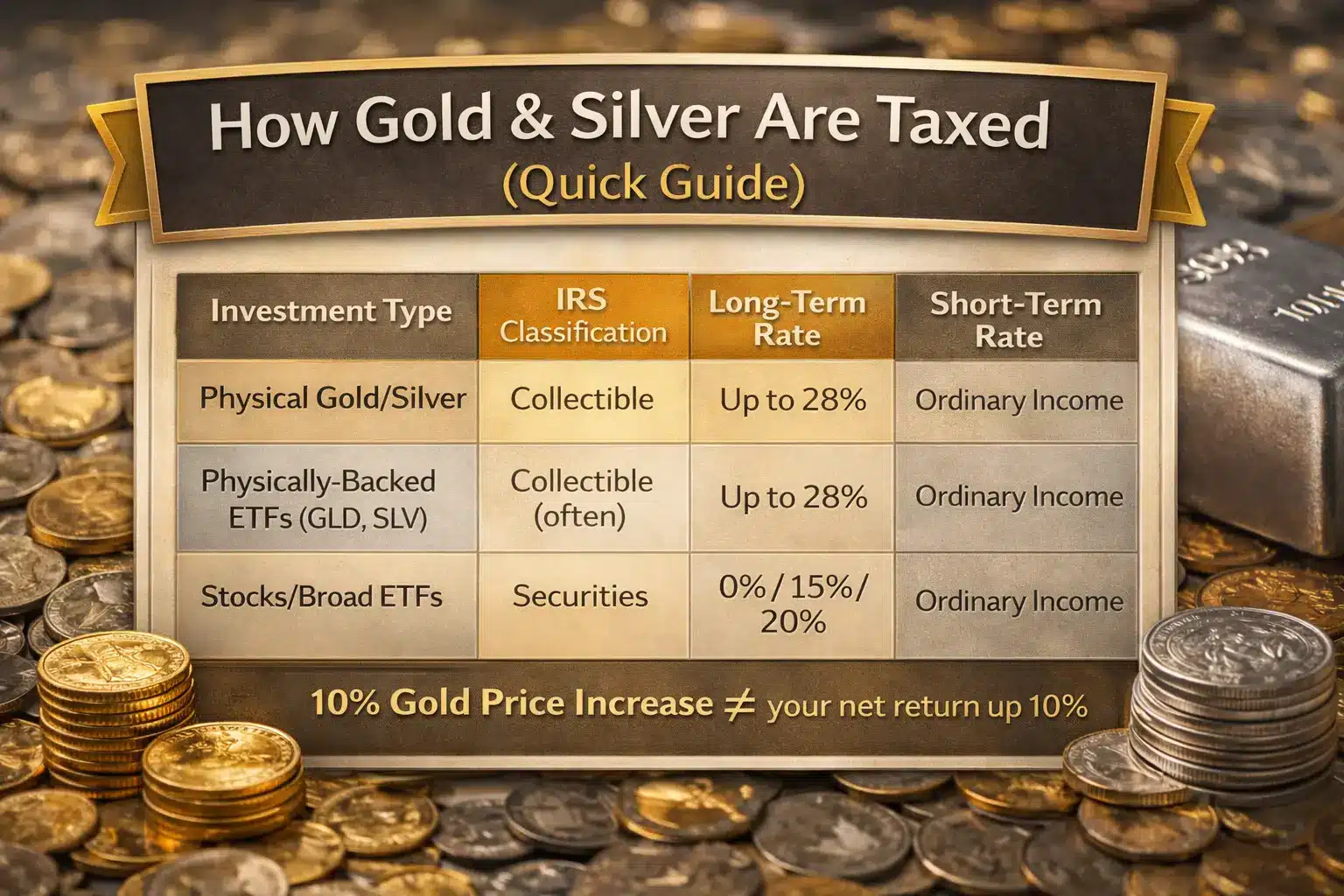
Unlike stocks and mutual funds, physical gold and silver are classified by the IRS as collectibles. This classification has important tax consequences.
If you sell physical gold or silver after holding it for more than one year, the gain is taxed at a maximum federal rate of 28 percent, rather than the lower long-term capital gains rates that apply to most securities. If the asset is held for one year or less, gains are taxed as ordinary income at your marginal tax rate (generally higher than the collectible rate).
This higher collectibles rate is usually surprising to investors who assume all long-term investments receive the same tax treatment.
Learn more about tax savings strategies for high earners and investors here.
Physical Metals vs. ETFs and Funds
How you choose to hold gold or silver has a significant impact on taxes, liquidity, and costs.
Holding Physical Gold or Silver
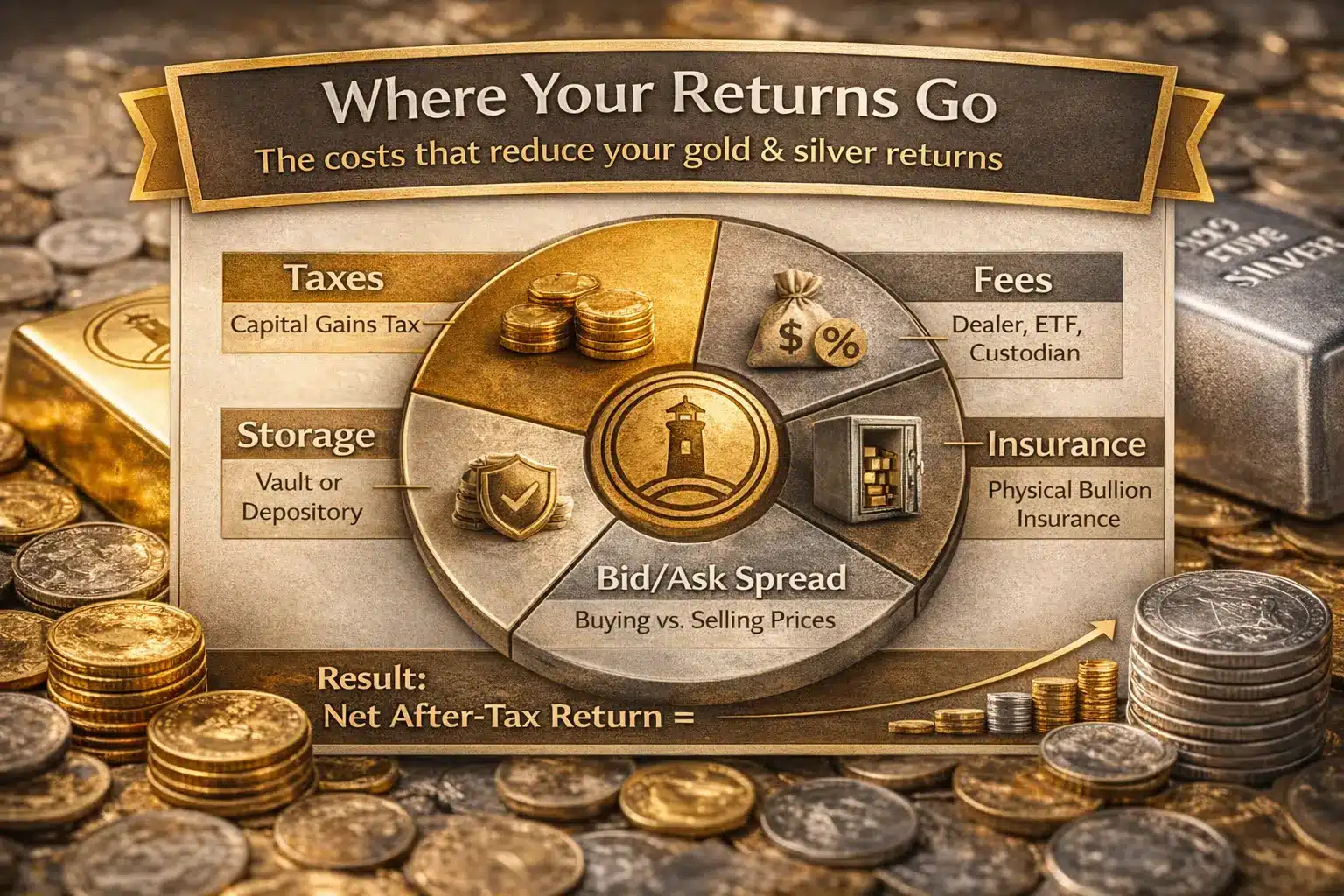
Physical ownership includes coins, bars, and bullion held directly or through a custodian. While some investors value the tangible nature of physical metals (who doesn’t like to hold some gold in their hands?), there are practical considerations that affect returns:
- Dealer markups when purchasing
- Bid-ask spreads when selling
- Storage and insurance costs
- Liquidity constraints depending on market conditions
It is common for the combined entry and exit cost on physical metals to range from 5 percent to 10 percent, depending on the product and market environment. As a result, prices must rise meaningfully before an investor realizes a true after-fee gain.
From a tax perspective, gains on physical metals are subject to the collectibles tax rules described above.
See how our team’s philosophy of integrated planning benefits investors and their families here.
Holding Gold or Silver ETFs
Many investors gain exposure through exchange-traded funds that track gold or silver prices. Popular examples include SPDR Gold Shares (GLD), iShares Gold Trust (IAU), and iShares Silver Trust (SLV). These products offer liquidity and ease of trading, but the tax treatment is often misunderstood.
Most physically backed precious metal ETFs are also taxed as collectibles, even though they trade like stocks. Long-term gains may still be subject to the 28 percent federal rate. Expense ratios, while generally modest, reduce returns over time.
Investors should review each fund’s structure carefully, as tax treatment depends on how the underlying assets are held.
Short-Term Trading vs. Long-Term Holding
For investors who trade gold or silver actively, gains are taxed as ordinary income regardless of whether the exposure is physical or through an ETF. Frequent trading also increases transaction costs and can significantly reduce after-tax returns.
Long-term investors should consider both the collectibles tax rate and the embedded costs of ownership when evaluating performance. Headline price appreciation does not always translate into strong after-tax results.
Personal Investing vs. Holding Precious Metals Through a Business
The same tax principles generally apply when gold or silver transactions occur through a business entity, but the outcome depends on structure and purpose.
When metals are held personally, gains are reported on the individual tax return and subject to collectibles rules. When held through a business, gains are typically reported as business income and flow through to the owner based on the entity type. In many cases, the effective tax rate is similar or higher once ordinary income treatment and payroll considerations are factored in.
Using a business entity to hold precious metals rarely improves tax efficiency and often adds complexity. Each situation should be reviewed carefully in the context of the investor’s overall tax picture.
What About Other Precious and Rare Metals
The same general framework applies to other metals such as platinum, palladium, and certain bullion-backed products. Physical ownership is usually treated as a collectible, and gains may be taxed at higher rates than traditional investments.
As interest in alternative assets grows, understanding these distinctions becomes increasingly important for investors.
Planning Considerations Before You Buy or Sell
Before buying or selling gold, silver, or other precious metals, investors should consider:
- Holding period and applicable tax rate
- Original cost basis and documentation
- Dealer spreads and transaction costs
- How gains fit into total taxable income
- Whether timing the sale across tax years could reduce exposure
Thoughtful planning can help avoid surprises and improve after-tax outcomes.
Final Thoughts
The recent surge in gold and silver prices has renewed interest in precious metals as an investment. While these assets can offer diversification and hedging benefits, they come with unique tax rules and cost structures that differ from stocks and bonds.
Understanding how gains are taxed, how ownership structure affects results, and how fees impact returns allows investors to make more informed decisions in a volatile market.
If you are considering buying or selling precious metals, or want to understand how these assets fit into your broader tax and financial strategy, our team helps clients evaluate the full picture and plan accordingly.