Key Points
- Historical financial statements explain what happened. Forecasting helps you prepare for what comes next.
- Budgets are static. Forecasts evolve as business conditions change.
- Forecasting improves hiring, capital investment, cash flow planning, and tax strategy.
- Scenario planning allows business owners to make better decisions before problems arise.
- Businesses that forecast regularly are better positioned to grow with confidence.
Most business owners review financial statements every month. They analyze revenue, expenses, profitability, and cash balances to understand how the business performed.
Those reports are valuable, but they all have one thing in common.
They only tell you what has already happened.
Financial forecasting shifts the conversation from looking backward to planning ahead. Instead of reacting to yesterday’s results, forecasting helps owners understand the financial impact of tomorrow’s decisions before they make them.
Why Historical Reports Only Tell Half the Story
Income statements, balance sheets, and cash flow statements provide a snapshot of the past. They answer important questions like:
- How profitable were we last month?
- How much cash do we currently have?
- What did we spend?
- How did revenue compare to last year?
But they cannot answer questions about the future.
Good decisions require understanding what is likely to happen next, not just what happened last month.
Questions Forecasting Can Answer
| Question | Forecast Value |
|---|---|
| Can we afford another employee? | Projects payroll, cash flow, and profitability. |
| Should we purchase new equipment? | Models financing, depreciation, and cash needs. |
| How much tax should we expect? | Estimates taxable income before year-end. |
| Can we support faster growth? | Shows future working capital requirements. |
Budgeting vs. Forecasting
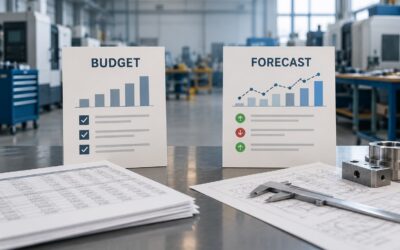
Many people use the terms interchangeably, but they serve different purposes.
| Budget | Forecast |
|---|---|
| Typically created once per year. | Updated throughout the year. |
| Represents a target. | Reflects expected outcomes. |
| Relatively static. | Adjusts as conditions change. |
| Measures performance. | Supports decision-making. |
Forecasting Improves Better Decisions
Forecasting allows business owners to test decisions before committing resources.
Instead of asking, “Can we do this?” the question becomes:
“What happens financially if we do?”
That single shift changes the quality of business decisions.
Forecasting Helps You Evaluate
- Hiring additional employees
- Opening another location
- Adding new product lines
- Purchasing equipment
- Increasing marketing investment
- Managing debt
- Preparing for tax obligations
- Planning distributions to owners
Scenario Planning Creates Confidence
The strongest forecasts do not predict one future. They prepare for several.
Scenario planning helps owners evaluate best-case, expected-case, and downside outcomes so they can respond before circumstances force difficult decisions.
| Scenario | Planning Focus |
|---|---|
| Best Case | Growth, hiring, expansion, capital investment. |
| Expected Case | Normal operations and steady cash management. |
| Downside Case | Expense reductions, financing needs, liquidity planning. |
Businesses rarely fail because they did not review historical reports. They struggle because they did not prepare for what was coming.
Where Forecasting Fits in FP&A
Financial forecasting is a core part of Financial Planning & Analysis (FP&A). It connects historical financial data with forward-looking business decisions so owners can better understand where the company is headed and what actions may be needed along the way.
For growing businesses, FP&A can help connect forecasting with cash flow planning, profitability analysis, tax projections, staffing decisions, and long-term growth strategy.
The Practical Takeaway
Financial statements remain essential, but they should never be the end of the conversation.
The businesses that consistently make confident decisions combine historical reporting with forward-looking forecasting. They understand not only where they have been, but where they are headed and what financial decisions today will mean tomorrow.
Looking backward explains performance. Looking forward drives better decisions. Financial forecasting gives business owners the visibility they need to grow strategically, manage risk, and build long-term value.
Ready to improve your financial visibility? Contact Southcoast Financial Partners to learn how our advisory team can help you forecast with confidence and make better financial decisions.